Free guide · Opening a food business
Before You Start: The UK Guide to Opening a Food Business
Thinking of opening a café, restaurant, takeaway, food van or market stall? Before you sign a lease or buy equipment, here's what UK food law expects of you — in plain English, with links to the official GOV.UK, Food Standards Agency and HSE guidance — and how LogYou can take care of the daily records for you.
By the LogYou team · Last checked 18 November 2026 · Screenshots from our Riverside Bistro demo kitchen.
Before you open: the short checklist
- Register with your local council at least 28 days before you open (free, and it can't be refused)
- Write a food safety management system based on HACCP — Safer Food, Better Business (SFBB) is the free FSA pack most caterers use
- Plan your daily records: opening and closing checks, fridge temperatures, cooking and cooling
- Know the 14 allergens in every dish, and label any prepacked-for-direct-sale (PPDS) food in full
- Proof the premises against pests and plan how you'll check for them
- Train every food handler before they start, and keep a record of it
- Complete a written fire risk assessment, and COSHH assessments for your cleaning chemicals
- Keep everything in one place, ready for your first inspection
This guide covers England, Wales and Northern Ireland, with notes where Scotland differs. It's general guidance, not legal advice, and doesn't guarantee an inspection result. Your local council's food safety team is the best place to check what applies to your business.
Part 1
Register your food business
Every food business has to register with its local council before it starts trading — including home kitchens, market stalls, vans and online-only businesses.
What the law expects
- If you sell, cook, store, handle, prepare or distribute food, you will usually need to register with the local authority where your premises are. This covers premises, homes, mobile units, temporary stalls and online selling.
- Register at least 28 days before you start trading. It's free and the council can't refuse it. If you're already trading without registering, register straight away — it's a legal requirement.
- Taking over an existing business counts as a new business, so the new owner registers too. If you operate from more than one place, register each premises with its own council.
- Your council will normally arrange a first inspection after you open. Brighton & Hove, for example, aims to visit within 28 days of a new business opening.
Official guidance
How LogYou helps
- The Setup Wizard collects your site details (with UK address lookup) and switches on only the record areas you need, so you're ready on day one.
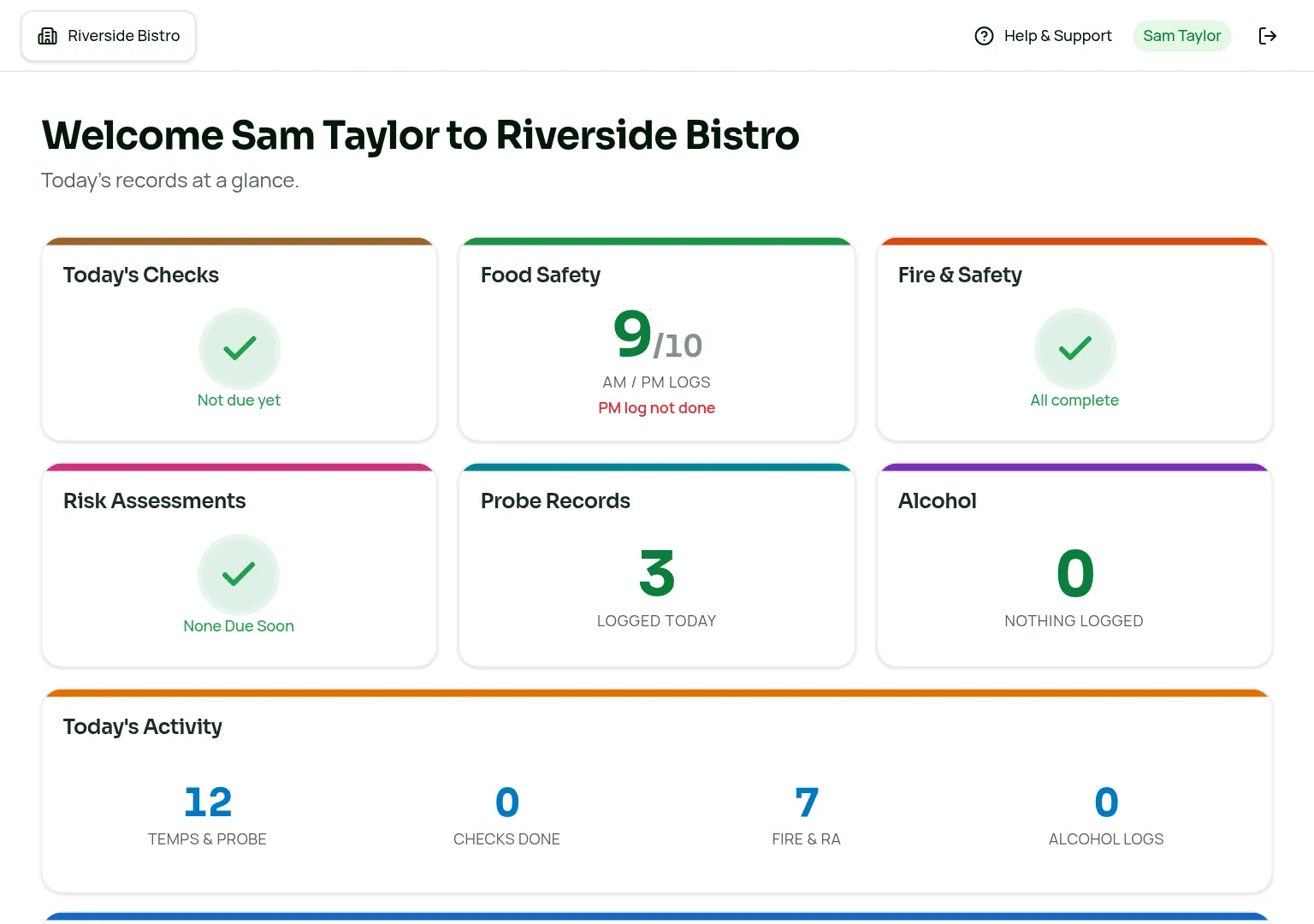
- Your dashboard shows what's still to do today across food safety, fire safety and tasks — from your first shift.
- Add your team, give each person the right access and get everyone recording on their own phone or a shared Kitchen Tablet.
Part 2
Food hygiene ratings and inspections
In England, Wales and Northern Ireland, councils rate businesses from 0 to 5 under the Food Hygiene Rating Scheme (FHRS). Scotland runs its own Food Hygiene Information Scheme. Here are the five things every new owner should understand.
What the law expects
- Ratings run from 5 (very good) to 0 (urgent improvement necessary). The rating is published online and you get a sticker for your door.
- Displaying the sticker is a legal requirement in Wales and Northern Ireland. In England it's voluntary but strongly encouraged — customers notice when it's missing.
1. How the scheme works
Officers score three things: how hygienically food is handled (preparation, cooking, cooling, storage), the cleanliness and condition of the premises, and your confidence in management — how well you run and record food safety. How often you're inspected depends on risk, from every 6 months to every 3 years in many areas. You're usually told your rating in writing within 14 days.
2. What happens during an inspection
Officers can visit without notice. They look at how you work, check for hazards, ask about your food safety management system and look at your records. You'll get feedback on the day, followed by a letter. Serious problems can lead to formal action, including notices or closure. The Food Safety Act 1990 makes it an offence to sell food that is harmful, unfit or contaminated.
3. Keeping your business safe and hygienic
You must look at each step of your food process, decide what could go wrong (physical, chemical, microbiological and allergen hazards) and put controls in place — this is hazard analysis, the basis of HACCP. Keep pests out, clean effectively, and control cross-contamination, especially between raw and ready-to-eat food (the FSA's E. coli O157 guidance explains this in detail).
4. Responding to your rating
If you think your rating is wrong or unfair you can appeal (there's a time limit, so act quickly). You also have a right to reply, which publishes your comments alongside your rating, and once you've made the improvements asked for you can request a re-rating visit. Some councils charge for re-rating visits.
5. Why a business might not have a rating yet
New businesses that haven't been inspected yet won't appear, and results can take a couple of weeks to go online after a visit. Mobile traders may be registered with the council where they keep their vehicle. Some low-risk businesses (such as childminders, or some retailers) aren't rated, and those trading from a private address may not be listed unless they ask to be.
Official guidance
How LogYou helps
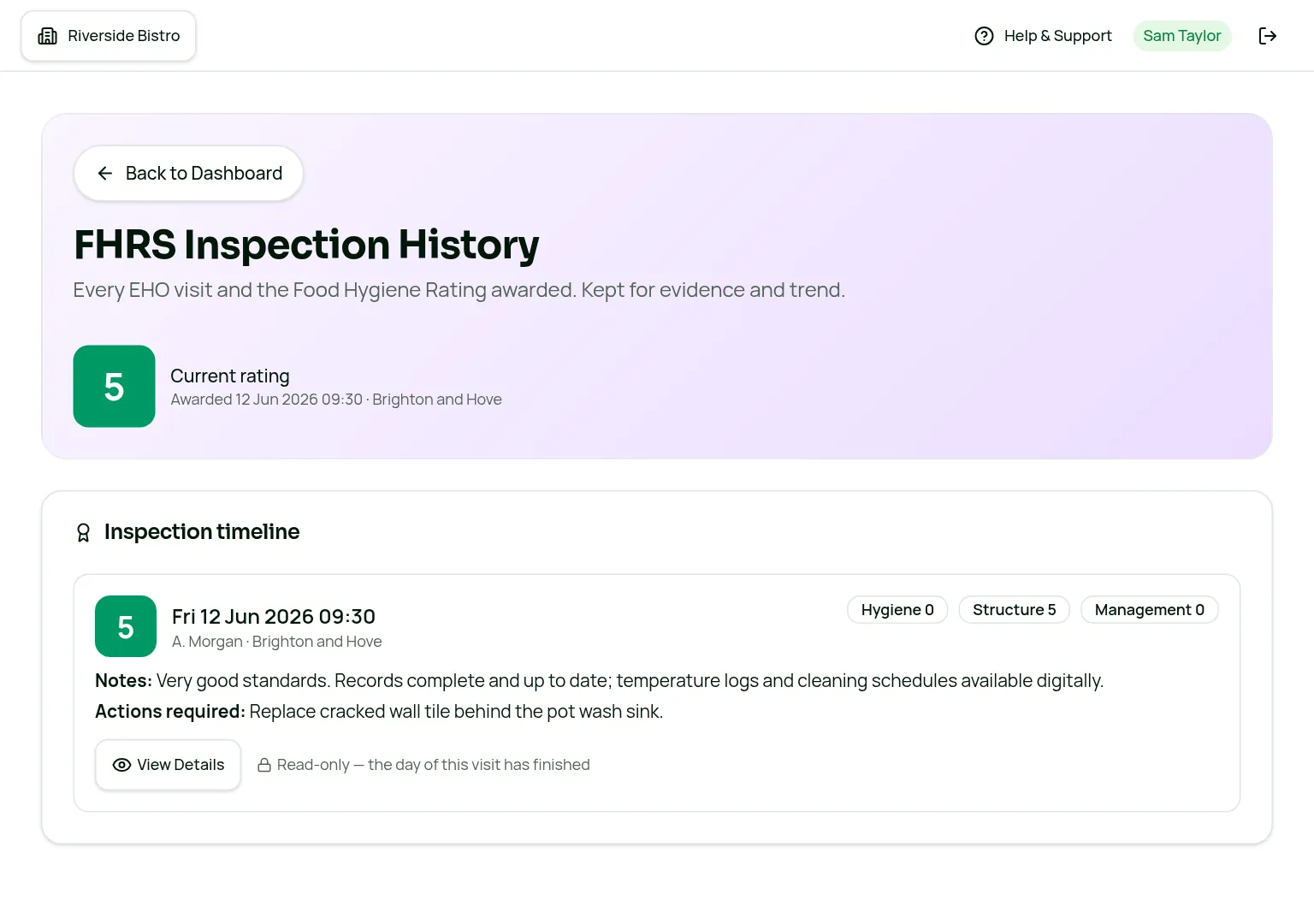
- FHRS History keeps every inspection visit: rating, the three scores, officer, council, notes, photos and the actions required — and locks past visits so they can't be changed.
- EHO Mode gives the inspector a temporary, read-only view of your records on your own device, with one Download Everything PDF button.
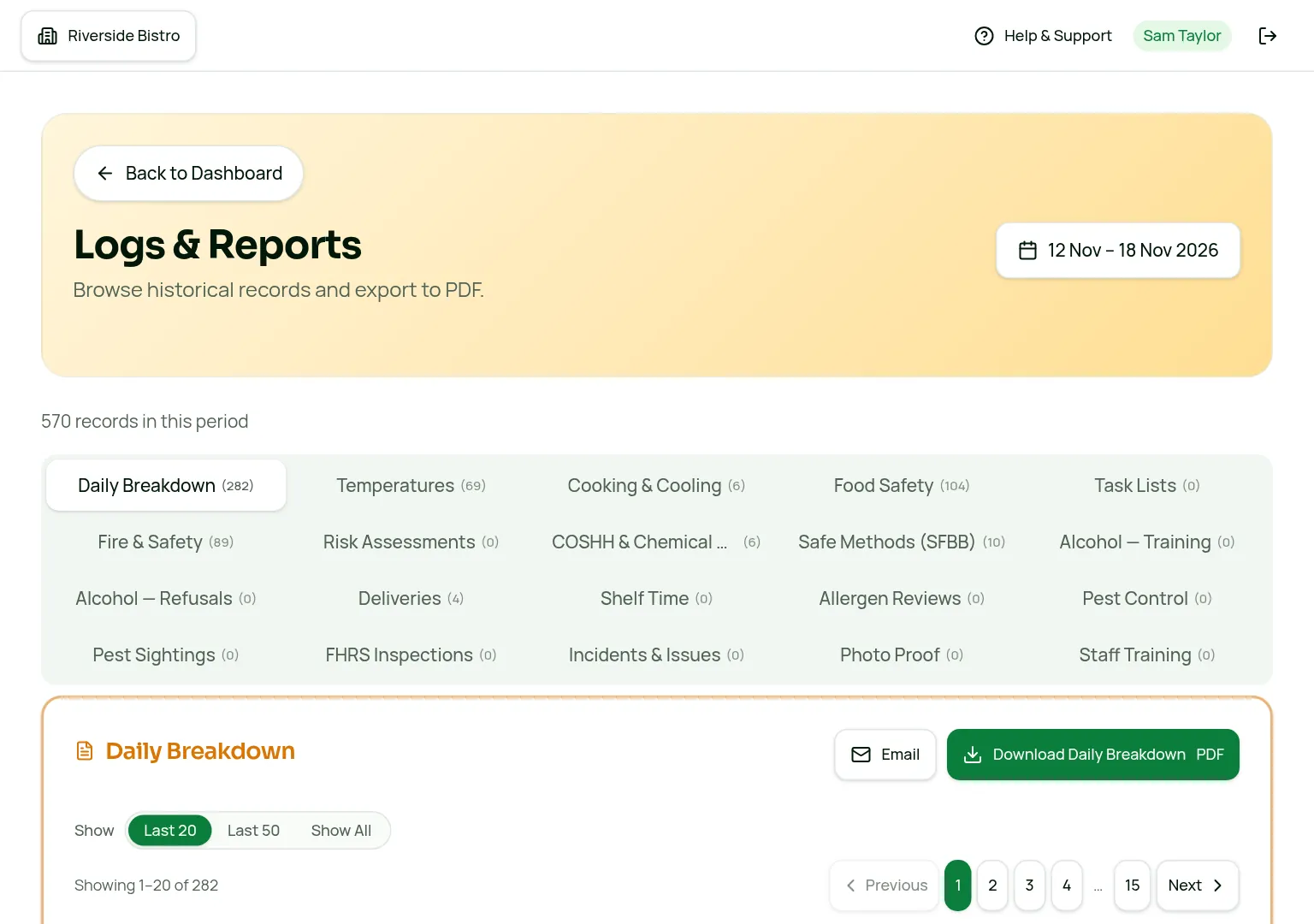
- Logs & Reports turns every record into tidy PDFs by date, so "confidence in management" is easy to prove.
Part 3
Your food safety management system (HACCP & SFBB)
The law requires a written food safety management system based on HACCP principles. Most caterers use the FSA's free Safer Food, Better Business (SFBB) pack — Scotland uses CookSafe.
What the law expects
- Your system must cover the 4 Cs — cross-contamination, cleaning, chilling and cooking — plus management: suppliers, training, opening and closing checks, and what to do when something goes wrong.
- SFBB includes a daily diary: sign off opening and closing checks every day, note any problems and what you did, and complete a 4-weekly review.
- Keep your safe methods up to date. Review them when you change your menu, equipment or processes — and make sure staff have read them.
Official guidance
How LogYou helps
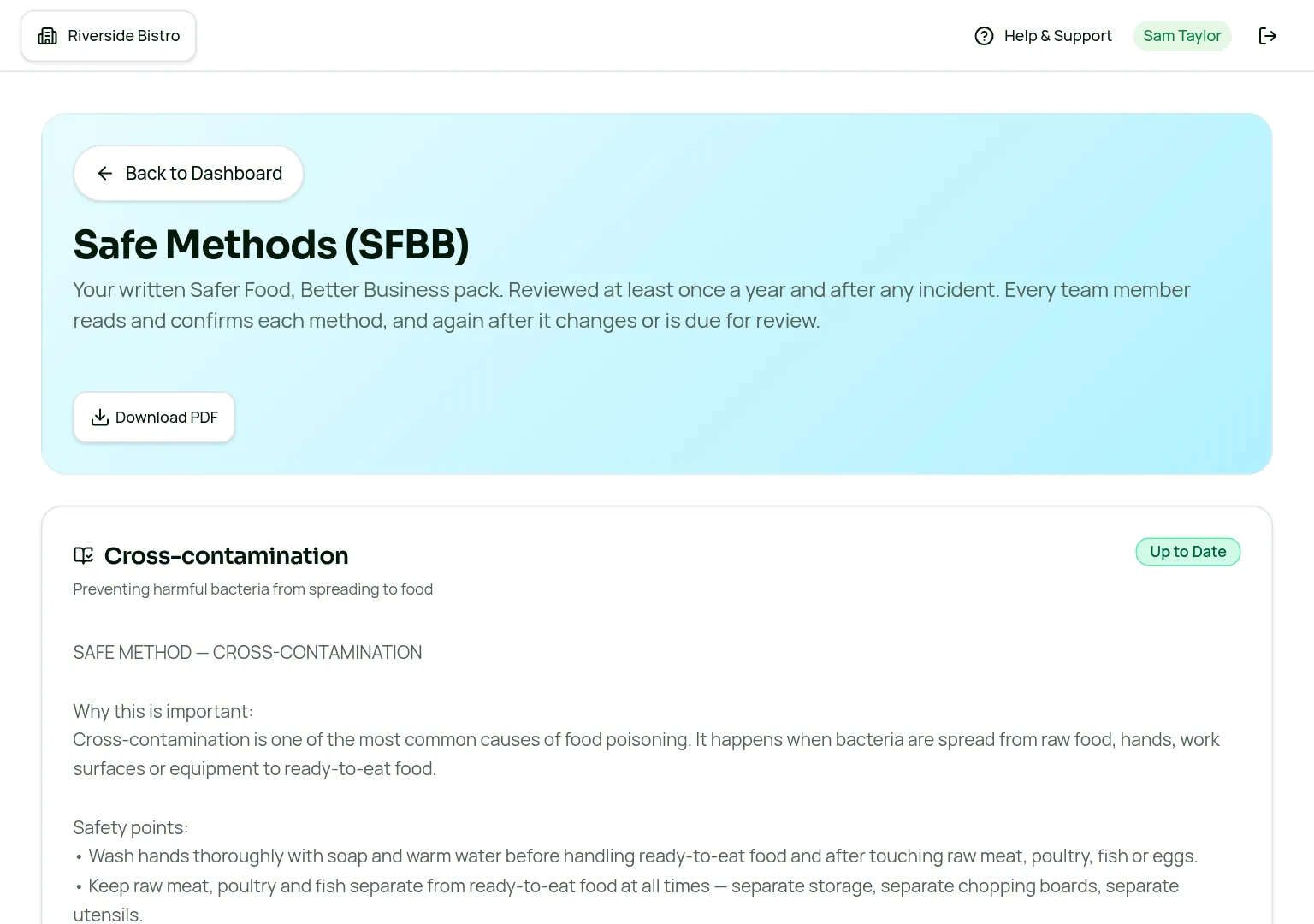
- Safe Methods (SFBB) holds your written methods for the 4 Cs and management. Every team member reads and confirms each one, and again after it changes or is reviewed.
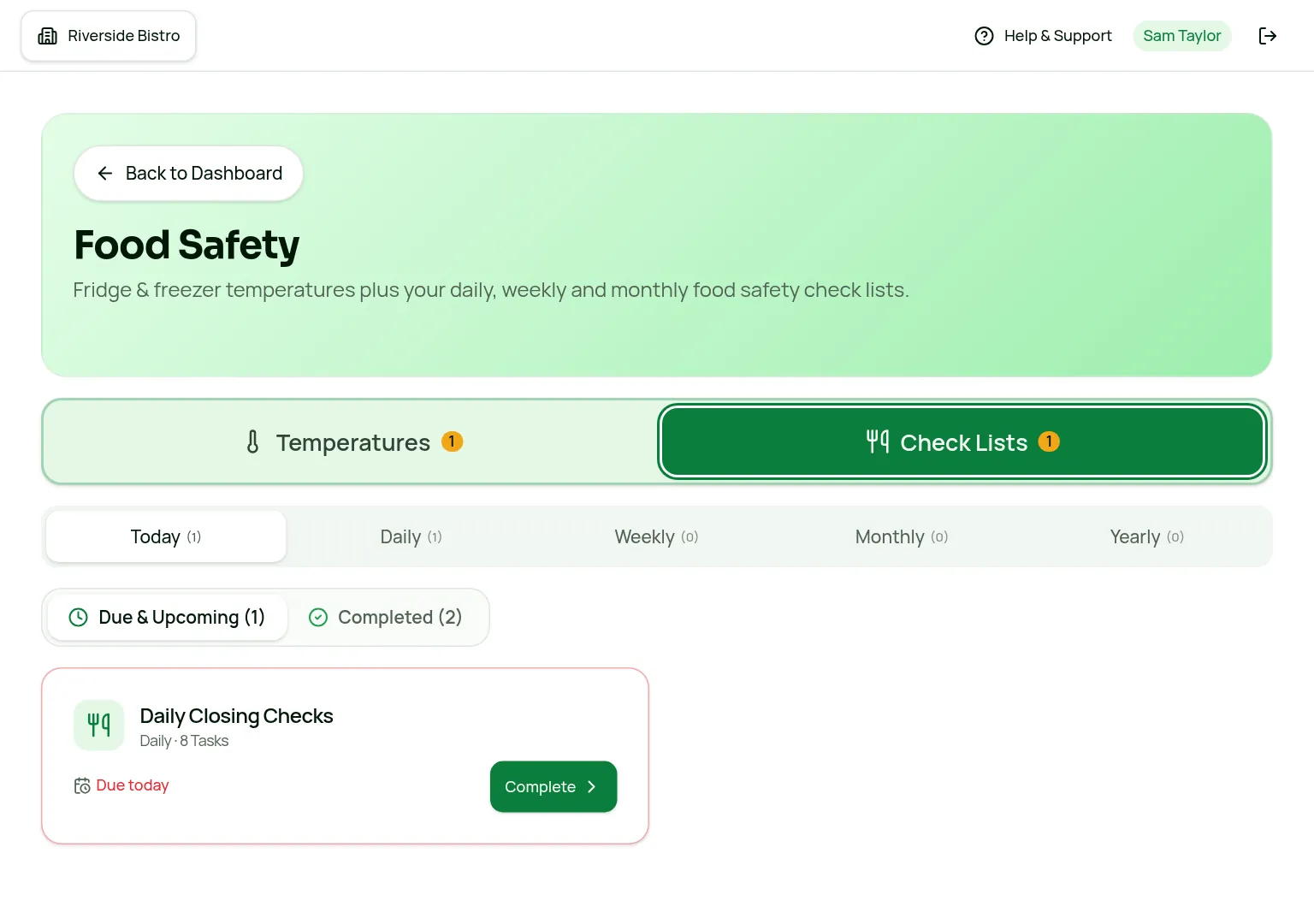
- Opening, closing and delivery check lists repeat daily, weekly or monthly, show what's due and record who did each check and when.
- A failed check needs a short "What went wrong?" note, so your diary always shows the problem and the action taken.
Part 4
Temperature control: chilling, cooking and hot holding
Temperature control is one of the first things an officer checks. Know the legal limits, check them regularly and write down what you did when something was out of range.
What the law expects
- Cold food must be kept at 8°C or below by law in England, Wales and Northern Ireland. Most kitchens aim for 5°C or below in fridges for a safety margin, and freezers at −18°C or colder.
- Hot food on display must be kept at 63°C or above. Cook food until it's steaming hot throughout — SFBB uses a core temperature of 75°C for 30 seconds (or an equivalent time and temperature) as its check.
- Cool cooked food quickly before chilling, and reheat thoroughly. Check probe thermometers regularly, for example in iced water (about 0°C) and boiling water (about 100°C).
Official guidance
How LogYou helps
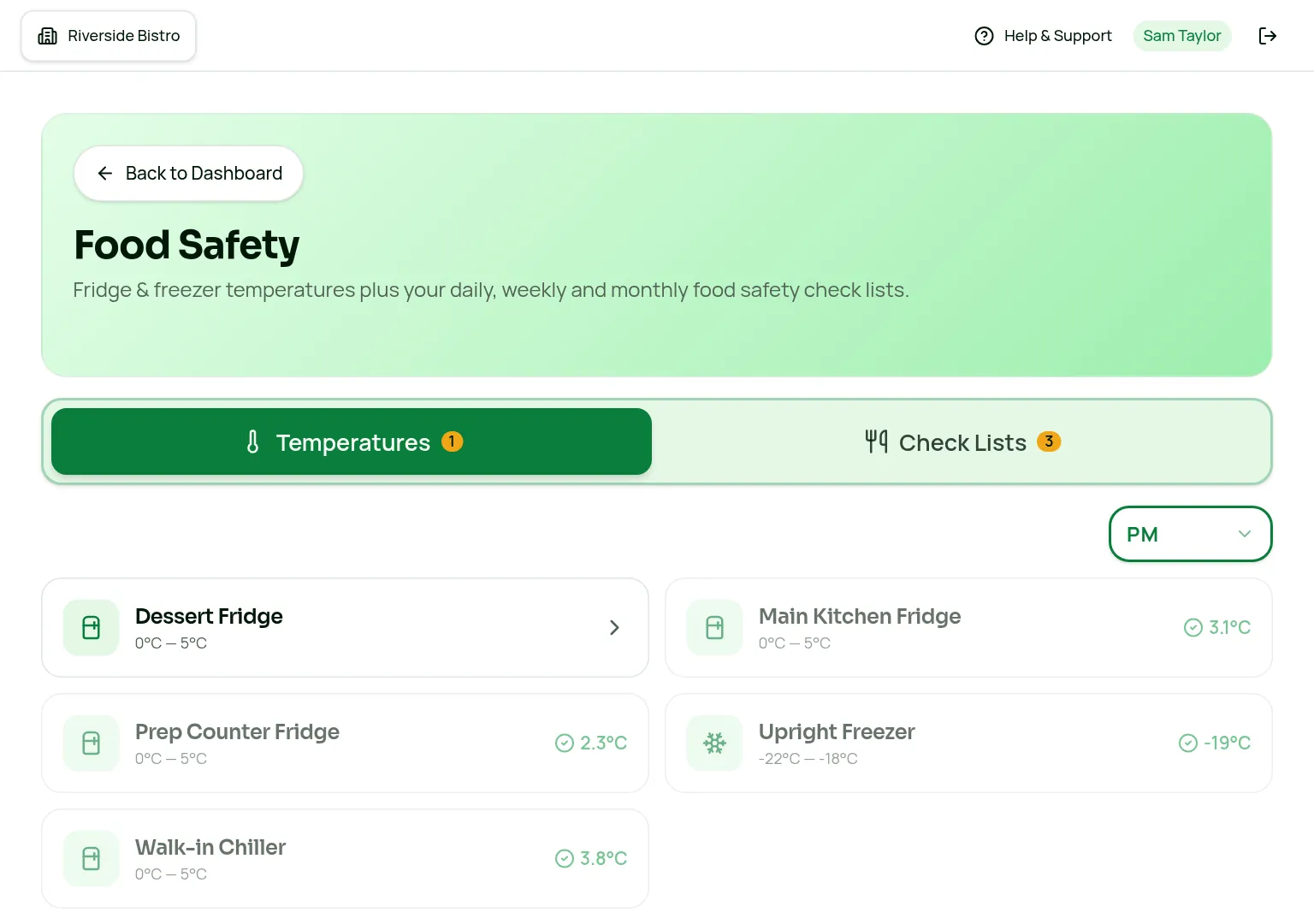
- Fridge and freezer readings twice or three times a day, with readings outside the safe range flagged straight away. Missed readings are shown honestly and can still be logged late.
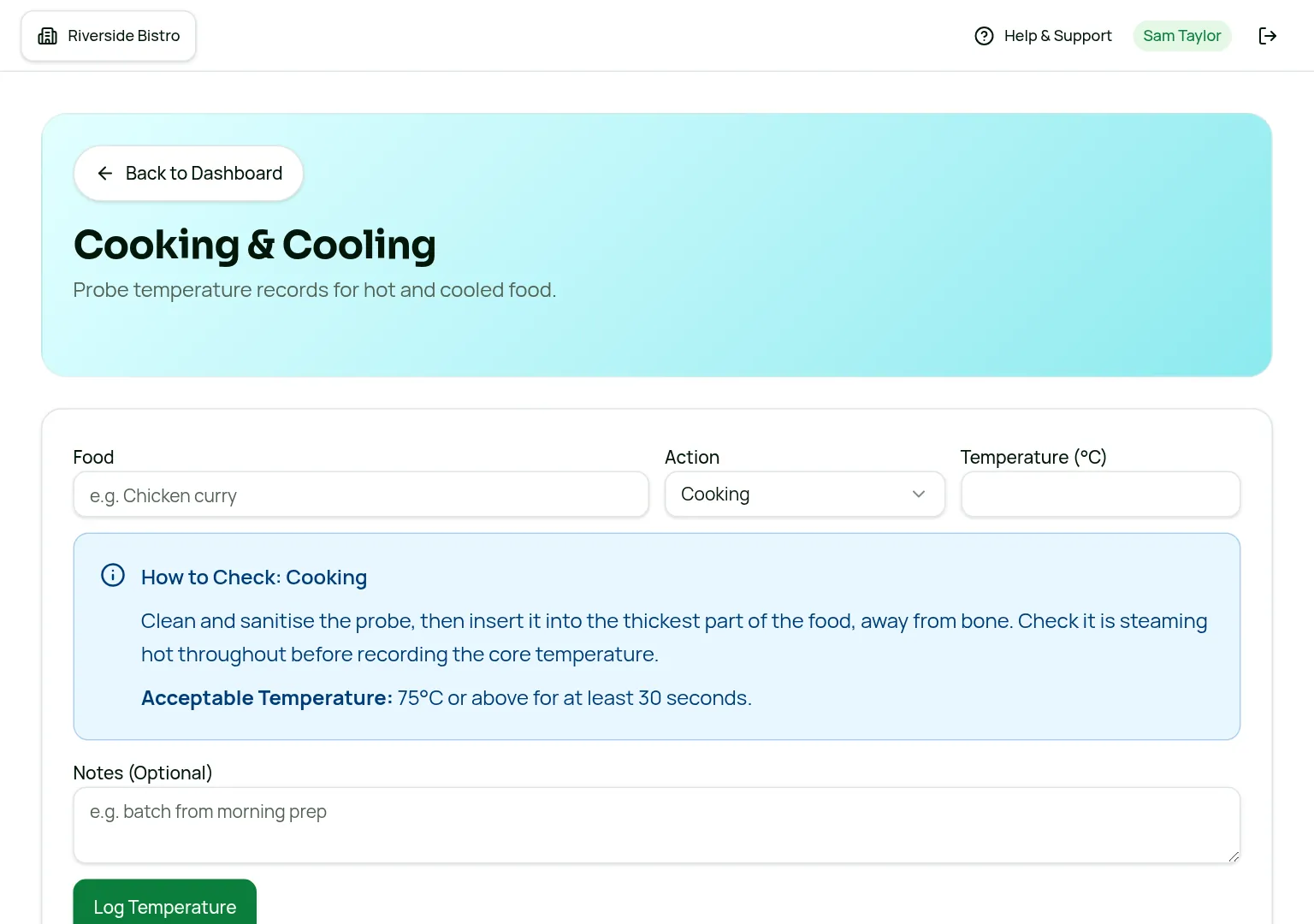
- Cooking & Cooling records probe temperatures for cooking, cooling, reheating and hot holding, with on-screen "How to check" guidance and the acceptable temperature for each.
- Records save even with no signal and sync automatically when you're back online.
Part 5
Allergens and Natasha's Law
You must be able to tell customers which of the 14 major allergens are in every dish, and label prepacked-for-direct-sale food in full.
What the law expects
- Know which of the 14 allergens (celery, cereals containing gluten, crustaceans, eggs, fish, lupin, milk, molluscs, mustard, tree nuts, peanuts, sesame, soya and sulphites) are in every item you sell, and give accurate information when asked.
- Food prepacked for direct sale (PPDS) — for example sandwiches made and packed on site before a customer orders — must show the name of the food and a full ingredients list with allergens emphasised. This is often called Natasha's Law.
- Prevent cross-contact in storage and preparation, and keep information up to date when recipes or suppliers change.
Official guidance
How LogYou helps
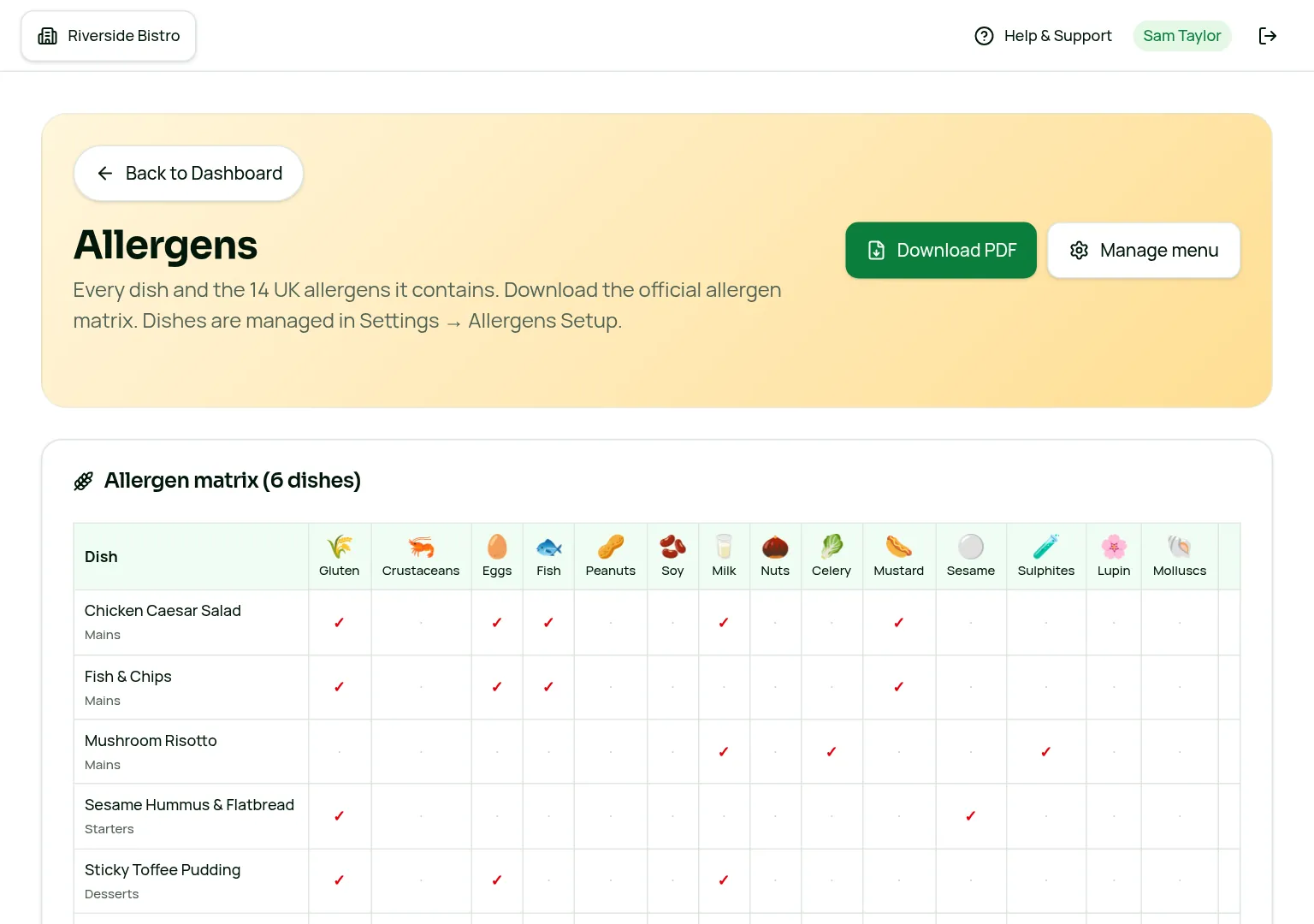
- The Allergens matrix shows every dish against all 14 allergens, and downloads as a PDF for your counter or folder.
- Allergen reviews are recorded with the date and who did them, so you can show your information is kept current.
- Allergen problems can be logged under Incidents & Issues with the action taken.
Part 6
Pest control
Mice, rats, cockroaches and flies can close a business overnight. Councils expect you to prevent pests, check for them and act quickly.
What the law expects
- Proof the building: seal gaps around pipes and doors, fit door brushes and fly screens, and keep doors closed. Store food off the floor in sealed containers.
- Check regularly for droppings, gnaw marks, nests and dead insects — especially in dry stores, behind equipment and near bins. Many businesses also use a pest control contractor, but you're still responsible day to day.
- Store waste in pest-proof bins with tight lids, remove it from food rooms at the end of each session, and use licensed carriers for waste and used cooking oil.
- If you find signs of pests, act at once: protect or throw away affected food, deep clean, call a professional and keep a record. A serious infestation can lead to closure.
Official guidance
How LogYou helps
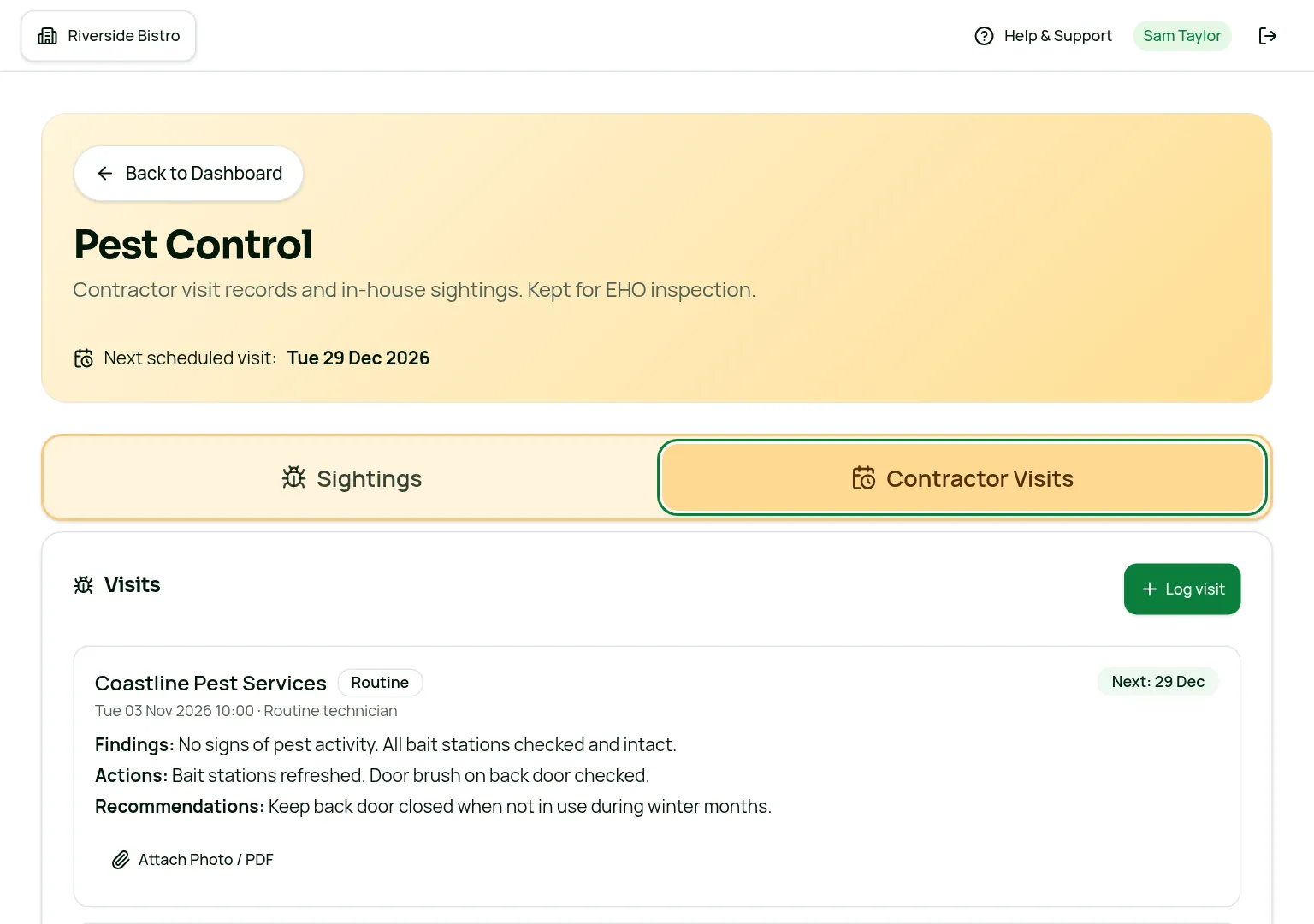
- Pest Control records your own sightings and every contractor visit — findings, actions, recommendations and the next visit date.
- Attach photos and contractor PDF reports to each record, even offline.
- Pest records are included in your reports and in EHO Mode, so you can show exactly what happened and what you did.
Part 7
Staff training, hygiene and fitness to work
Everyone who handles food must be supervised and trained in food hygiene in a way that suits their job — and must not work with food when they could make others ill.
What the law expects
- Train staff before they start handling food, and refresh it regularly. There's no legal requirement for a certificate, but you must be able to show staff are trained — keeping records is the easiest way.
- Staff with diarrhoea or vomiting must report it and stay away from food handling until they've had no symptoms for 48 hours.
- Good personal hygiene: thorough handwashing, clean clothing, hair tied back, cuts covered with blue plasters, and no handling food when unwell.
- Council-run courses aren't always available (Brighton & Hove's Level 2 course is currently paused), so many businesses use accredited online training.
Official guidance
How LogYou helps
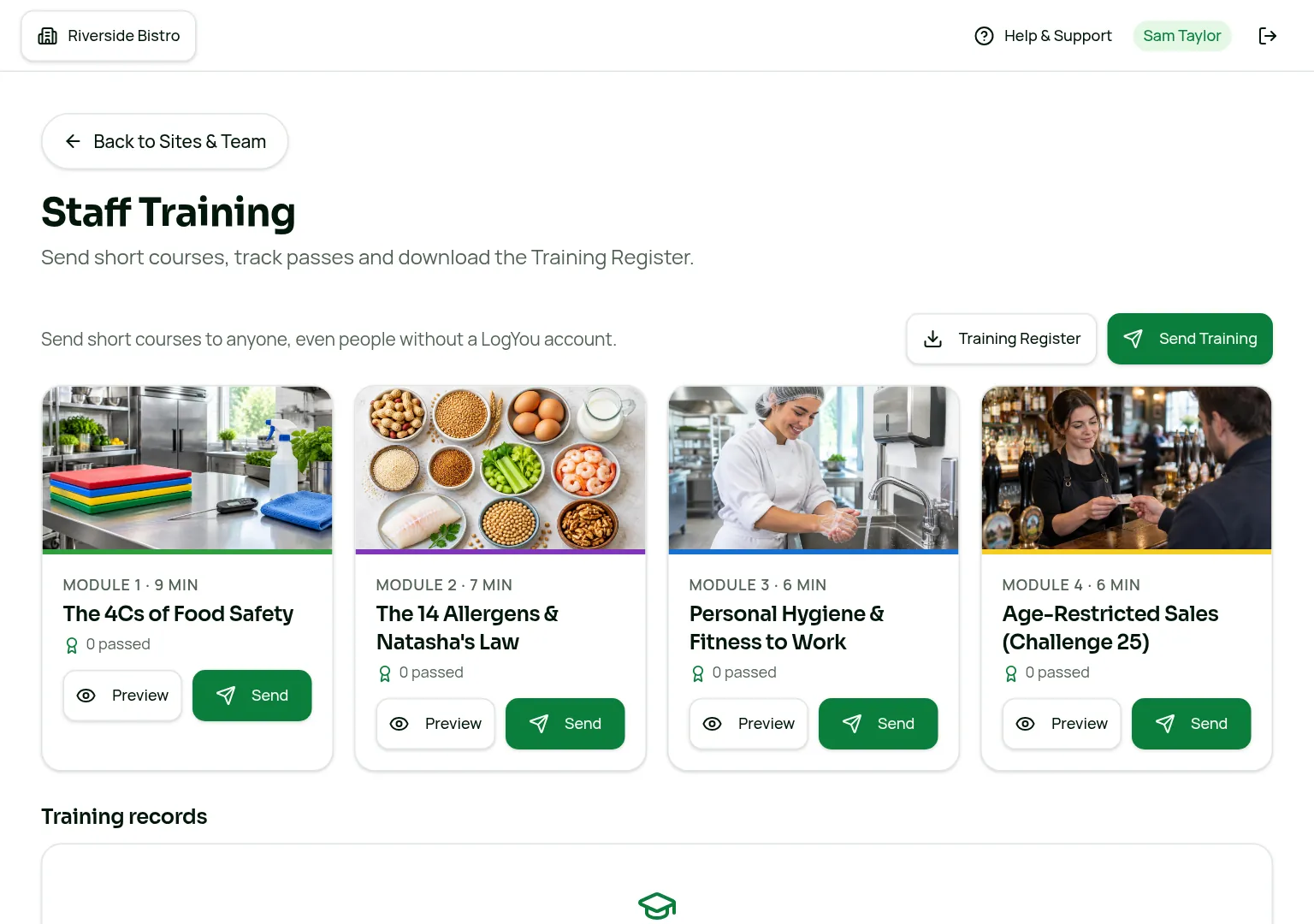
- Staff Training on paid plans: four short courses (the 4Cs of food safety, the 14 allergens and Natasha's Law, personal hygiene and fitness to work, and Challenge 25) with quizzes and certificates.
- Send courses to anyone, even people without a LogYou account, and download the Training Register for your records.
- New team members get deadlines to confirm your Safe Methods and pass risk assessment training, with reminders until they do.
Part 8
Health & safety, fire safety and chemicals (COSHH)
Food safety isn't the only law that applies. As an employer and occupier you're also responsible for fire safety, workplace health and safety and hazardous substances.
What the law expects
- Fire safety: the person in control of the premises (the 'responsible person') must carry out and write down a fire risk assessment, provide fire detection, extinguishers and clear escape routes, and test and maintain them regularly.
- Health and safety: assess the risks in your kitchen (burns, slips, knives, manual handling, gas) and record them if you have 5 or more employees. Report certain accidents under RIDDOR.
- COSHH: assess the cleaning chemicals you use, keep safety data sheets, train staff to use them safely and provide the right protective equipment.
Fun quiz
Do you think you're ready?
Test yourself with 5 quick questions on UK food safety law. It takes about 2 minutes and there's no sign-up.
Official guidance
How LogYou helps
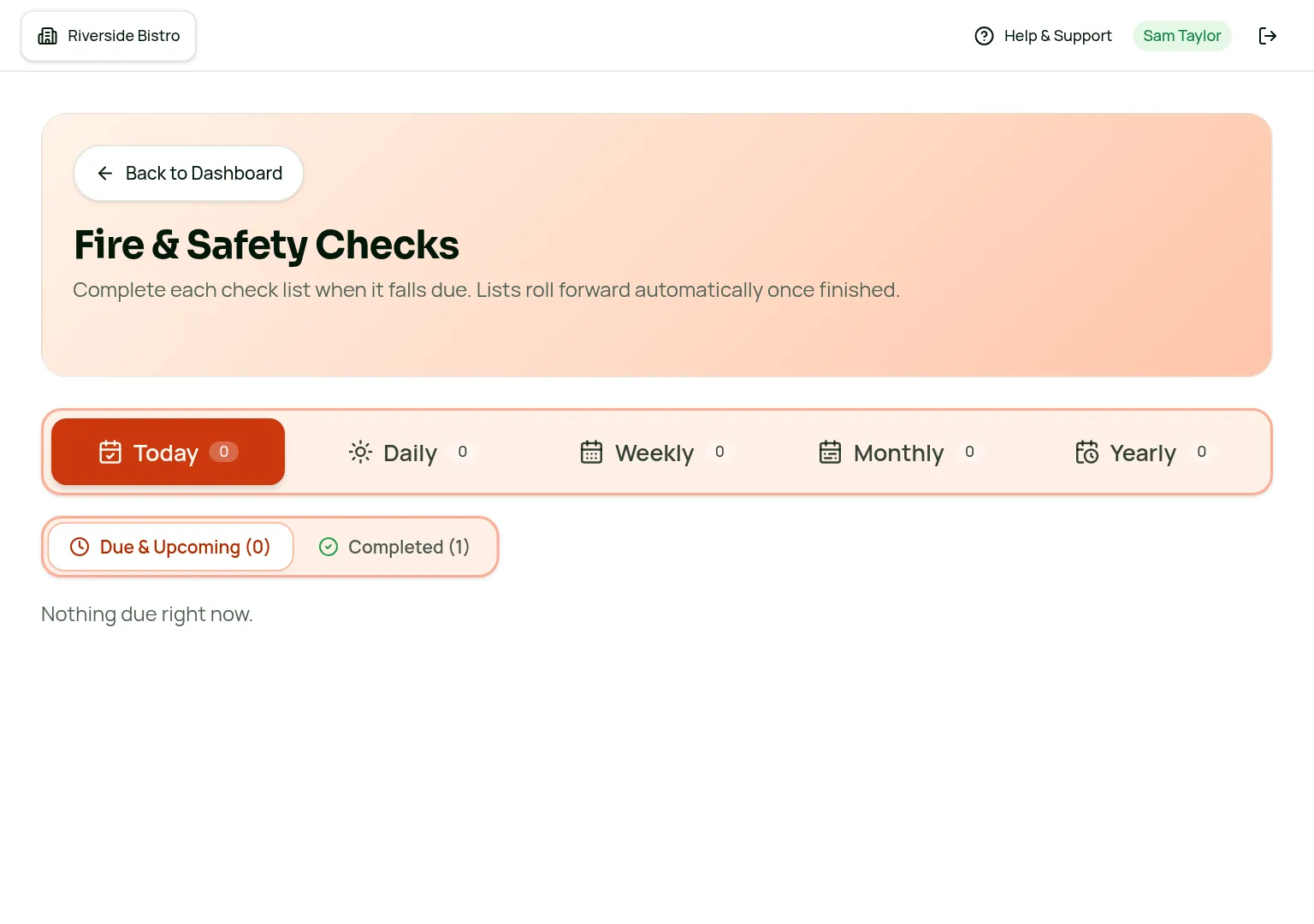
- Fire & Safety check lists for daily, weekly, monthly and yearly checks, such as alarm tests and extinguisher services, with overdue items flagged.
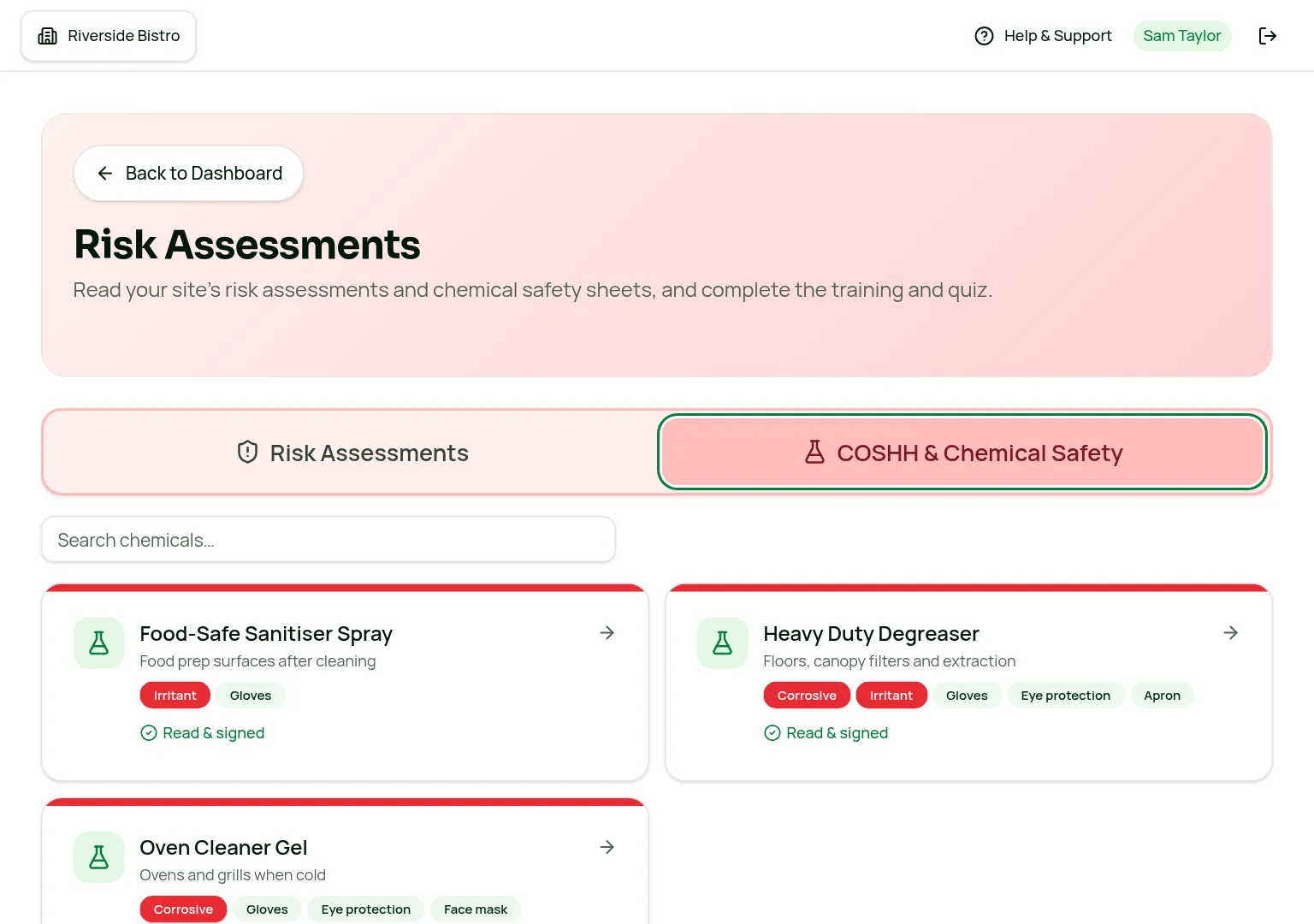
- Risk Assessments with team sign-off and optional training quizzes, plus Incidents & Issues for accidents and near misses.
- COSHH & Chemical Safety: store each supplier's safety sheet with a quick safety card, and have every team member read and sign each version.
Also worth knowing
Other topics your council covers
Food stalls, markets and events
Stalls need registration, safe transport, handwashing and water, temperature control and waste storage — and trading standards rules on labelling, pricing and weights also apply.
Waste and used cooking oil
Keep waste in pest-proof bins away from food rooms. Store used cooking oil in a covered, leak-proof container, never pour it down the drain, and use a licensed waste carrier.
Complaints, food poisoning and food alerts
Councils investigate complaints and reported food poisoning. Sign up for FSA food and allergy alerts so you know quickly if a product you use is recalled.
Labelling and food standards
Food must be what you say it is. Labels, menus and descriptions must not mislead, and prepacked food needs the right durability dates.
Common questions
Do I need a food hygiene certificate to open a food business?
There's no legal requirement to hold a certificate, but food handlers must be trained and supervised in food hygiene in a way that suits their work. Most businesses use a Level 2 food hygiene course and keep records as proof.
How long before opening should I register?
At least 28 days before you start trading. Registration is free and can't be refused. If you've already started without registering, register straight away.
Is digital record keeping accepted instead of paper SFBB?
Yes. The law cares that your system is based on HACCP, followed in practice and kept up to date — not whether it's on paper or an app. Records must be accurate, complete and available when an officer asks.
When will my first inspection be?
It depends on your council and the risk of your business. Many councils aim to inspect new businesses within a few weeks of opening. Brighton & Hove, for example, aims for 28 days.
Can I appeal my food hygiene rating?
Yes. You can appeal if you think the rating is wrong, publish a right to reply, and request a re-rating visit once you've made improvements. Appeals have a time limit, so check the FSA forms and your council's letter.
Official sources
All links checked on 18 November 2026. Linking to them doesn't mean the FSA, HSE or any council endorses LogYou.
- Food business registration (GOV.UK)
- Starting a food business (FSA)
- Food hygiene ratings (GOV.UK)
- Safer Food, Better Business (FSA)
- Food hygiene for businesses (FSA)
- Allergen guidance for food businesses (FSA)
- Fitness to work (FSA)
- Fire safety in the workplace (GOV.UK)
- Health and safety in catering (HSE)
- Brighton & Hove City Council: Food safety
Keep reading: EHO inspection checklist · Kitchen temperature guide · How to get a 5-star rating · Free templates
Open with your records already sorted
Start a free trial and set up your checks, temperatures, allergens and training before your first customer walks in.
Start Free 7-Day TrialNo card required