Free Fridge Temperature Log Sheet (PDF)
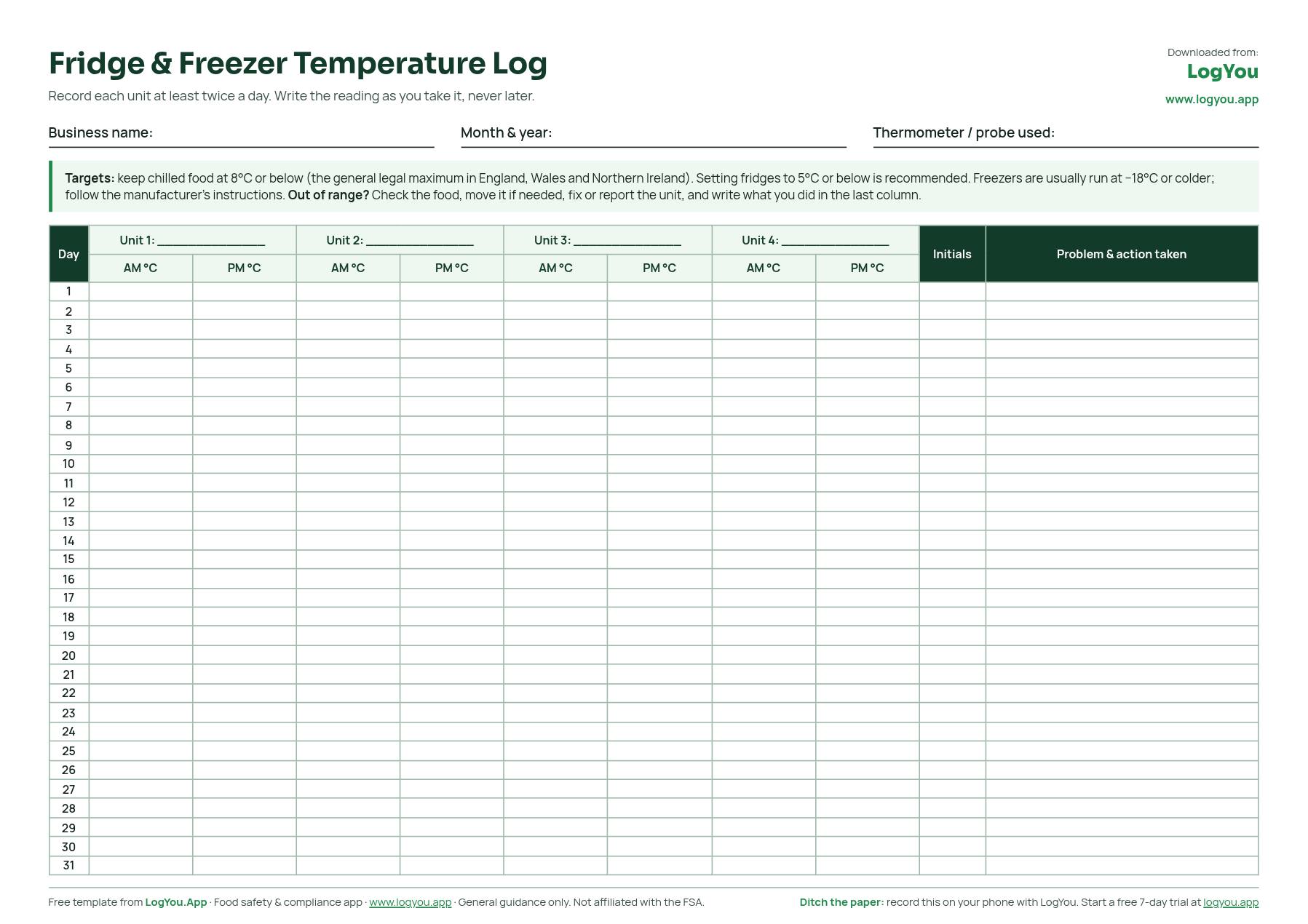
A one-page monthly record for up to four fridges or freezers. Print it, pin it near the units and record each check as you take it.
Fridge & freezer temperature log (PDF, 1 page, A4) · No sign-up needed
What's on the sheet
- 31 days of AM and PM readings for four fridges or freezers
- Spaces for the business name, month and the thermometer used
- An initials column so every reading has a name against it
- A problem and action column for out-of-range readings
- The key temperature targets printed at the top
How to use it
- 1Write each unit's name at the top of its column.
- 2Check every unit at least at opening and again later in the day, using the display or a clean probe as your procedure says.
- 3Write the reading straight away and initial it. Never fill in readings later.
- 4If a reading is too high, check the food, move it to another unit if needed and get the unit fixed. Write down what you did.
- 5Keep finished sheets with your food safety records so you can show them at an inspection.
What temperature should a commercial fridge be?
For chilled food in England, Wales and Northern Ireland, 8°C is the general legal maximum. Setting fridges to 5°C or below is recommended to allow for door opening and loading.
Scotland's legal wording is different; follow CookSafe and keep chilled food at 8°C or below as recommended.
Freezers are usually run at −18°C or colder; follow the manufacturer's instructions for the unit and the food.
A reading is only useful with what you did about it. Record the action, not just a second, better number.
General guidance only, not legal advice. Check the official sources below and your local authority for anything specific to your business.
Tired of paper sheets?
Do the same check on your phone with LogYou
In LogYou, each fridge and freezer has its own check, reminders go out at your chosen times (twice or three times a day), out-of-range readings ask for an action straight away, and every entry is named and time-stamped. Records save offline and sync when the signal returns.
Common questions
How often should I check fridge temperatures?
Most small caterers following Safer Food, Better Business check fridges at least once a day and many check at opening and closing. Follow the frequency in your own food safety procedures; more checks give earlier warning of a fault.
Is 5°C or 8°C the legal limit?
In England, Wales and Northern Ireland, 8°C is the general legal maximum for chilled food. 5°C or below is the recommended fridge setting, not the legal limit.
Can I keep temperature records digitally instead?
Yes. FSA guidance allows Safer Food, Better Business diary records to be kept electronically. What matters is that the records are accurate, complete and easy to find.
More free templates
Official sources
Reviewed 13 November 2026. Linking to these sources does not imply their approval of LogYou.