Free Allergen Matrix Template (14 Allergens, UK)
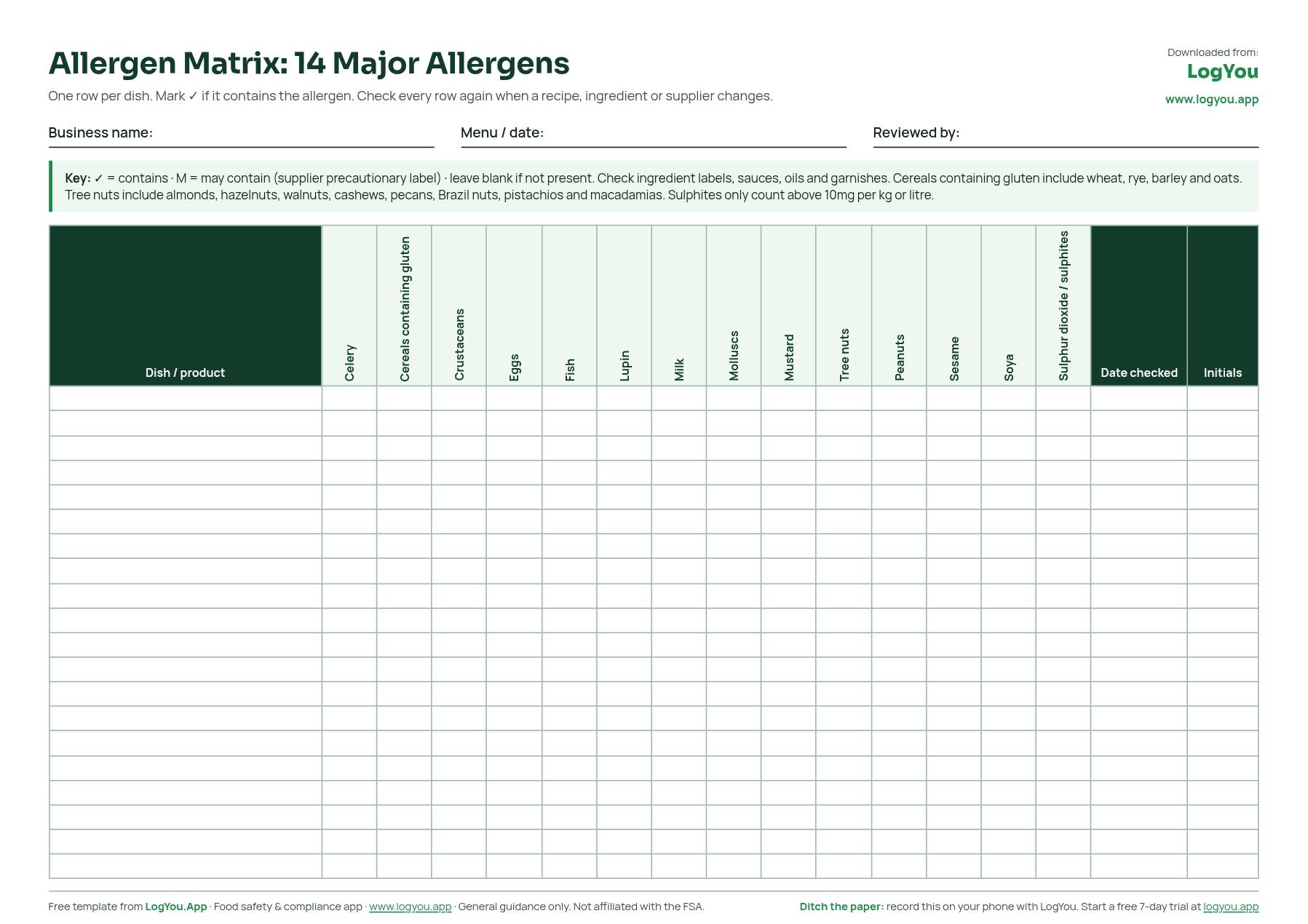
A one-page allergen chart for your menu. List each dish, tick the allergens it contains and record when you last checked it against the recipe and labels.
Allergen matrix (PDF, 1 page, A4) · No sign-up needed
What's on the sheet
- All 14 major allergens across the top
- 20 rows for dishes or products
- A clear key: contains, may contain or not present
- Date checked and initials for every row
- Notes on gluten cereals, tree nuts and sulphites
How to use it
- 1List every dish, sauce and side, including specials.
- 2Check each recipe and every ingredient label, including oils, dressings and garnishes.
- 3Mark the allergens each dish contains, and 'M' where a supplier label says 'may contain'.
- 4Date and initial each row. Check it again whenever a recipe, ingredient or supplier changes.
- 5Keep it where staff can check it before answering a customer.
The 14 allergens you must manage
UK food businesses must be able to give accurate information about 14 allergens: celery, cereals containing gluten, crustaceans, eggs, fish, lupin, milk, molluscs, mustard, tree nuts, peanuts, sesame, soya, and sulphur dioxide or sulphites above 10mg per kg or litre.
You must keep allergen information accurate, update it when recipes or ingredients change, and make sure staff know how to answer questions and avoid cross-contamination.
Food prepacked for direct sale (for example, sandwiches made and wrapped on site) needs a full ingredients label with allergens emphasised. This is often called Natasha's Law.
A matrix helps staff answer questions, but they should still check when unsure rather than guess.
General guidance only, not legal advice. Check the official sources below and your local authority for anything specific to your business.
Tired of paper sheets?
Do the same check on your phone with LogYou
In LogYou, each menu item has its own allergen record, reviews are dated and named, and staff can check allergens from their phone. Delivery checks help you spot ingredient changes from suppliers.
Common questions
Is an allergen matrix a legal requirement?
The law requires accurate allergen information for the 14 allergens, not a specific chart. An allergen matrix is a common, simple way to keep that information organised and easy for staff to check.
How often should I update my allergen matrix?
Whenever a recipe, ingredient, brand or supplier changes, and at regular reviews. Date each check so you know the information is current.
What does 'may contain' mean on my matrix?
It reflects a precautionary label from a supplier where cross-contamination can't be ruled out. Tell customers about it so they can make an informed choice.
More free templates
Official sources
Reviewed 13 November 2026. Linking to these sources does not imply their approval of LogYou.